Dan Martell recently said something in a YouTube Short that captured the problem with every definitive list of the best AI tools: “What I said three months ago isn’t true today.”
He talked about tools he once dismissed and now uses regularly, tools he previously recommended that he would now approach cautiously, and models that changed his view after one release.
That sounds dramatic until you look at your own AI stack.
A few months ago, Claude was one of the most important tools in mine. I used it heavily and recommended it often. It was very good at the kind of long-context thinking, writing and strategic work I needed.
Today, I am getting a better overall return from ChatGPT Work at roughly half what I was paying for Claude.
That does not mean Claude suddenly became a bad product. It means the market moved, my needs evolved and another platform became more useful for the way I actually work.
Your Favorite Tool Can Remain Good And Still Become The Wrong Choice
We are accustomed to evaluating software on a much slower cycle. A company selected a CRM, project-management platform or design suite, trained the team and expected to use it for years. Switching costs were high, and the differences between established products usually changed gradually.
AI does not behave that way.
A single model release can change the quality of research, writing, analysis or coding. A new workflow can turn a chatbot into a working environment. Connected apps, project memory, document creation and agentic execution can change the value of the entire platform without the old tool getting noticeably worse.
That is the important distinction. Sometimes your favorite tool is not failing. It is simply being passed.
I Care Less About The Model And More About The Return
I am not interested in joining an AI fan club. I care about what the system helps me accomplish, how much intervention it requires and whether the final work is good enough to use.
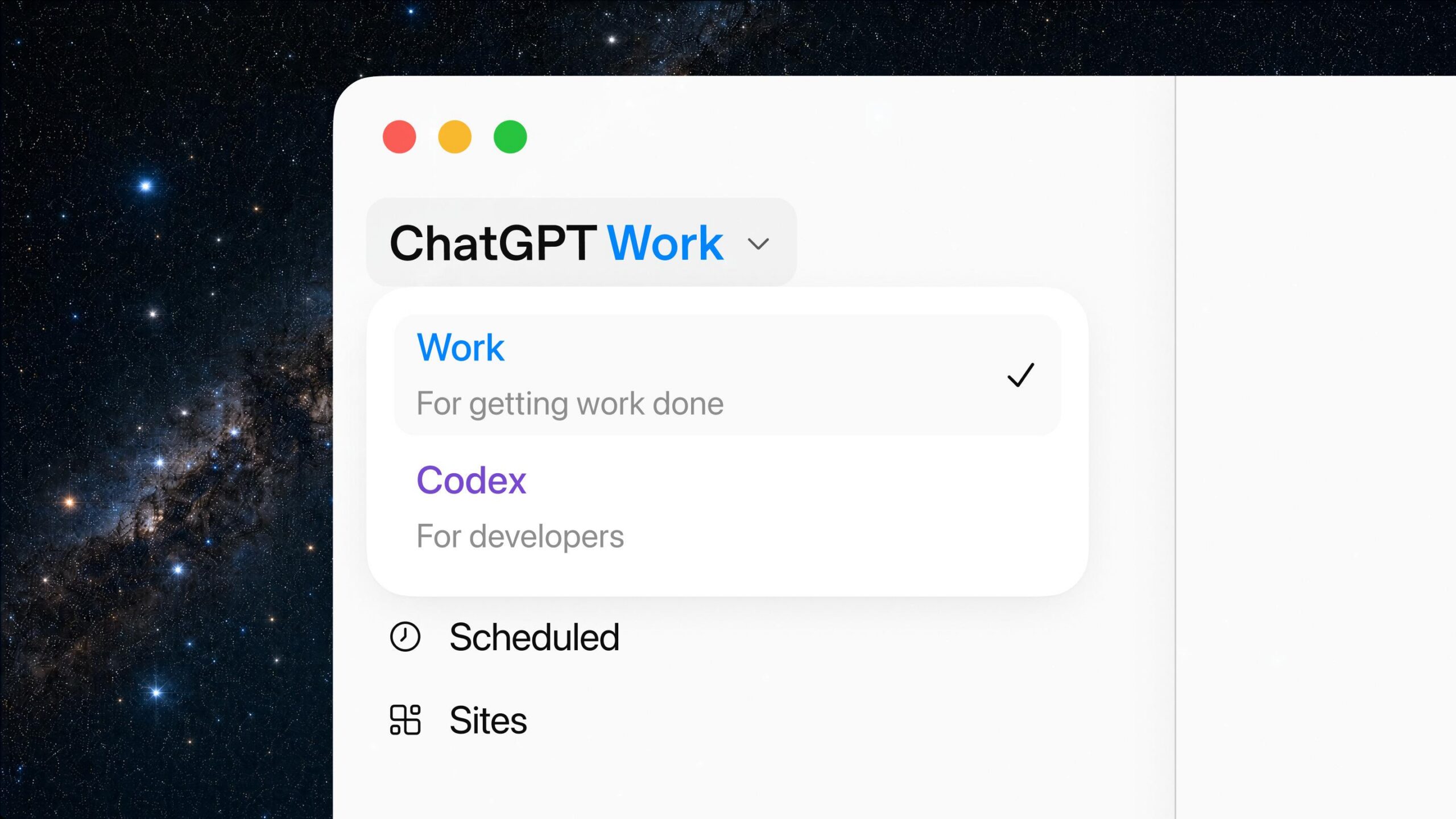
My current ChatGPT Work environment can hold the context of a project, use connected information, research current facts, work with files and produce finished assets inside the same workflow. For my business, the quality of the return has improved while the cost has come down significantly.
That is a business decision, not a declaration that one company has permanently won.
Claude may release something next month that changes the calculation again. Gemini, Grok, Perplexity or a company most founders have not considered may do the same. The only sensible loyalty is to the outcome.
Context Still Matters, but Portability Matters More
The strongest argument for staying with an AI tool is often context. Once the platform understands your company, preferences, frameworks and work, leaving can feel like training a new employee from the beginning.
That context creates value. It can also create inertia.
If the intelligence of the system lives only inside one platform, switching becomes unnecessarily expensive. The business ends up tolerating weaker results because too much knowledge is trapped in the relationship.
I want my core context stored independently: voice guidance, strategy, frameworks, customer insights, operating instructions and the source documents behind important decisions. The platform can use that context, but it should not be the only place the context exists.
That gives me the freedom to move when the market moves.
Founders Need A Review Cycle, Not A Forever Stack
I now think every AI subscription should have to re-earn its place.
Once a quarter, I want to know:
- Which tools produced work we actually used?
- Which required more correction than they saved?
- Which capabilities are now duplicated somewhere else?
- Which workflows depend too heavily on one platform?
- What has improved enough to justify a new test?
This is not an invitation to chase every launch. Constant switching can waste as much time as misplaced loyalty. The goal is to test deliberately, compare meaningful work and change only when the result justifies the disruption.
The best AI tool is not the one with the most devoted users or the most impressive demo. It is the one producing the best work for your business right now.
Ask me again in three months. My answer may be different.
The AI landscape is changing fast and the way we work with it is changing even faster. If you want to go deeper into what this means for businesses, careers, and the future of work, watch my full conversation with AI Architect Elvin Aghammadzada on Leadr. Podcast.





















Read the Comments +