
I’ve spent the last few months building agents for my business, and right now I’m wrapping that work up so it walks into 2027 running instead of half-done. My human team still makes the judgment calls. The agents sit on top of that team and take the repetitive, rule-based work off our plates.
Somewhere along the way I noticed a pattern I didn’t love. If I’m spending Tuesday afternoon double-checking my agents, the time they saved me went right back into checking their work.
It turns out I’m far from the only one, and now there’s a name for it.
The Bill Nobody Budgeted For
On October 14, G2 published its 2026 AI Agents Report, “Crossing the Agentic Chasm,” based on a survey of 1,019 B2B decision makers. The headline is that agents have moved from pilot to production. 86% of B2B software buyers purchased AI agent software or services in the past year, and 66% now run agents in limited or full production.
Then comes the catch. G2 calls it the Distrust Tax, which it describes as the cost of operating agents under constrained trust.
Nearly a third of buyers (31%) say their employees spend at least six hours every week “bot-sitting,” which is G2’s term for overseeing agent work. 45% say oversight and rework eat more than a quarter of the productivity gains they expected. And 46% report higher-than-expected operating costs.
Tim Sanders, G2’s Chief Innovation Officer, put it this way: “An agent’s ability to do work is no longer creating the bottleneck to adoption; it’s now formed when organizations don’t trust agents to complete the work.”
That line stuck with me, because it matches what I’ve felt in my own week.
Why We End Up Bot-Sitting
Most of the babysitting I’ve done hasn’t come from skipping the setup. I defined the roles, set the boundaries and spelled out what finished should look like. But the agents didn’t consistently carry that context into the next task. I kept reminding them what we’d already decided and correcting things we’d already resolved.
That’s what led me toward building a second brain: a shared, maintained record of decisions, responsibilities and current work that agents can reference. Writing the instructions once wasn’t enough. I needed to build checking that record into how the work gets done.
“I built a morning-brief agent to tell me what needed my attention across email, meetings and our task board. But it kept bringing back outdated items, so I was checking its homework before I could start my own work.
“Done” needed to mean more than producing a summary. It needed to check later replies and sent emails, recognize what had already been completed, and flag anything it couldn’t verify. A task still sitting on a board wasn’t enough evidence that I still owed it.“
The report hints at the same root cause. Only 7% of buyers are comfortable giving agents full autonomy. 48% prefer agents with guardrails, and 29% want them limited to specific tasks. People want agents to work, and they want to know where the edges are. When the edges aren’t written down, a human ends up standing at every one of them.
There’s a governance piece too. 47% of organizations say agent ownership and controls are still informal or department-led, and just 27% keep a central registry of their agents. If nobody’s sure who owns an agent or what it’s allowed to do, everybody checks its work.
For founders and CEOs running lean teams, that oversight time comes straight out of the hours you were trying to buy back.
Write a Three-Line “Done Means” Note
Here’s the move I’d make first. Give every agent a short note that answers three questions, and paste it into its project instructions.
- Done means: what finished looks like. Be specific about the format, the length, and where the output goes.
- Don’t touch: what’s off-limits. Name the files, accounts, people, and decisions it should never change on its own.
- Stop and ask me when: the moment a human should decide. Pricing, anything public, anything that goes to a client, or anything that doesn’t match the brief.
Three lines won’t remove every check, and they shouldn’t. Humans stay in the loop for judgment. What the note does is tell you which checks matter, so you’re reviewing the decision points and skipping the busywork.
It takes about five minutes per agent. Start with the one you check the most.
Three More Ways to Lower the Tax
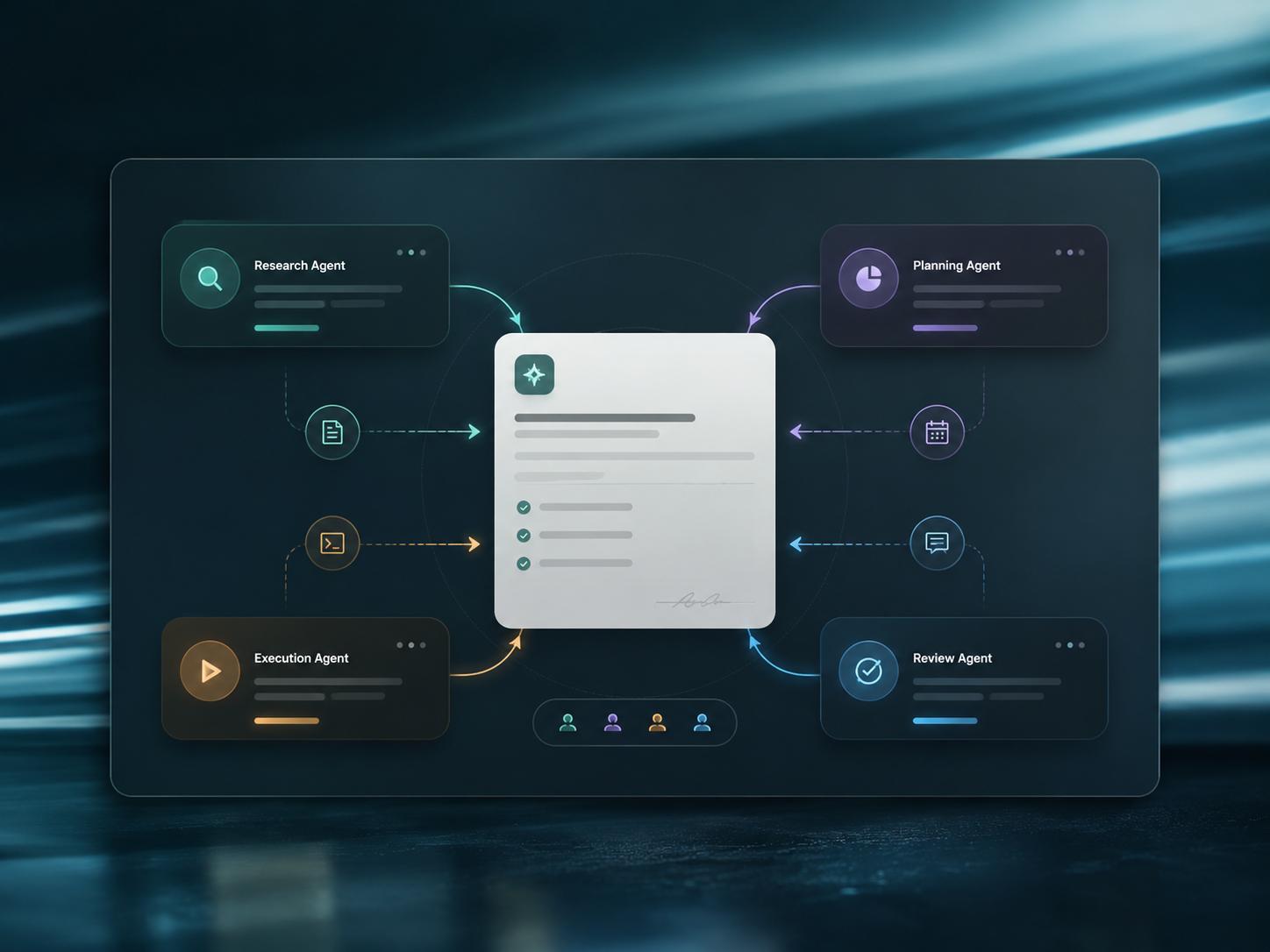
Keep a simple agent roster. List every agent you run, what it does, who on your team owns it, and what it can access. A shared doc is plenty. G2 found most organizations don’t have this, and it’s the fastest way to stop agents from quietly overlapping or wandering into work they weren’t meant to do.
Check the output at the decision point. Instead of reading everything an agent produces, decide where a human signs off. That might be before anything is published, sent, or priced. Everything upstream of that point gets a quick scan, and the sign-off gets your full attention.
“For one client’s strategy roadmap, I kept a specific approval point before distribution. The agent could help prepare the document, but I reviewed it before authorizing the email. Even then, my approval meant “send this for review.” It didn’t mean the client had approved the budget, scope or timeline. That distinction matters.
Getting a document ready, sending it and getting approval to execute are three different steps.“
Track your bot-sitting time for one week. Jot down every time you or someone on your team stops to review, fix, or redo an agent’s work. At the end of the week you’ll see which agent is costing you the most attention. That’s the one that needs a better “done means” note, a tighter scope, or a human back in charge of the task.
The Payoff Is Real When Trust Is Earned
I don’t want to make this sound like agents aren’t worth it. The same report found that 83% of buyers say agents improve employee satisfaction by reducing repetitive work, and 35% have moved people into higher-value roles. Just 14% report reducing headcount.
That’s the version I’m building toward. My people spend their time on ideas, relationships, and decisions, and the agents handle the repeatable stuff they’ve earned the right to handle. Trust grows one clear instruction at a time.
So as you plan for 2027, add one line to the plan. Before you add another agent, make the ones you already have easier to trust.
I’d love to hear how much bot-sitting time you find when you track it. Drop your number in the comments.
And if you want one practical AI tip like this every week, my Tribe List sends exactly one, along with what’s on my mind. You’re welcome to join us.



























Read the Comments +