
If an agent doesn’t buy back your time or change a decision, you didn’t build leverage. You built an expensive way to feel busy.
I’m going to admit something most people building AI right now won’t.
For a while, I built agents to say I had built them.
Two years ago, when AI really took off, I did what most early adopters did. I played, experimented, wired up workflows and watched systems spit out summaries, reports, and tidy little digests on a schedule. It looked sophisticated. It demoed well. If you’d asked me whether I was ahead of the curve, I’d have said yes without blinking.
Then I ran the only test that matters, and most of what I built failed it.
The agents weren’t buying back my time. Several were costing me time. They produced more to read, more to check, more dashboards to glance at and feel vaguely behind on. I’d taken a business that already had too much information moving through it and built machines to generate even more. That isn’t leverage. That’s dilution with a clever interface.
The Seduction Of Building
Building an agent feels like an outcome. It’s concrete. You can point to it. You can tell people you have a chief-of-staff agent and a research agent and a content agent, and it sounds like you’re operating at a different level.
But the agent is the mechanism. It’s the drill, not the hole. No business got better because an agent exists. A business gets better when a decision improves, when friction disappears, when hours come back to the people doing the highest-value work. The existence of the agent proves none of that. It just proves you can build one.
I’d confused the architecture for the result. They aren’t the same thing, and the gap between them is where a lot of smart people are quietly losing time right now.
The Two Words That Exposed It

The reframe came from Harvard Data Science Initiative’s Agentic AI Intensive, which I went through recently. The lesson that landed hardest was a brutal little question you ask after anything an agent produces:
So what?
My agent writes a weekly market report 80% faster. So what? A faster report is an output. If nobody acts on it, or it doesn’t change a single decision, the speed is meaningless. I just manufactured noise more efficiently.
The real outcome sounds different. It sounds like: this gave me back ten hours this week, which I moved into client strategy. That’s value. Everything else is motion in a nicer wrapper.
A Ferrari Engine In A Horse-Drawn Carriage
Most people bolt an agent onto a process that was already broken. The image from the lecture that stuck with me: it’s like putting a Ferrari engine in a horse-drawn carriage. You don’t get a faster car. You break the carriage. The agent synthesizes a hundred-page document in seconds, then waits four days for the same human approval the old process always needed. You haven’t removed the bottleneck. You’ve built a very fast way to arrive at it.
So I Rebuilt The Whole Thing
After the intensive, I stopped patching and started over. I re-engineered my entire fleet of agents from a blank page, and I built my own command center. I call it Jarvis. It runs point across the whole operation, pipeline, revenue, content, and the team and works directly with me, day to day. My weeks are more productive than I genuinely thought was possible. The difference wasn’t the technology. It was the focus.
The Hive, And The Human Who Runs It
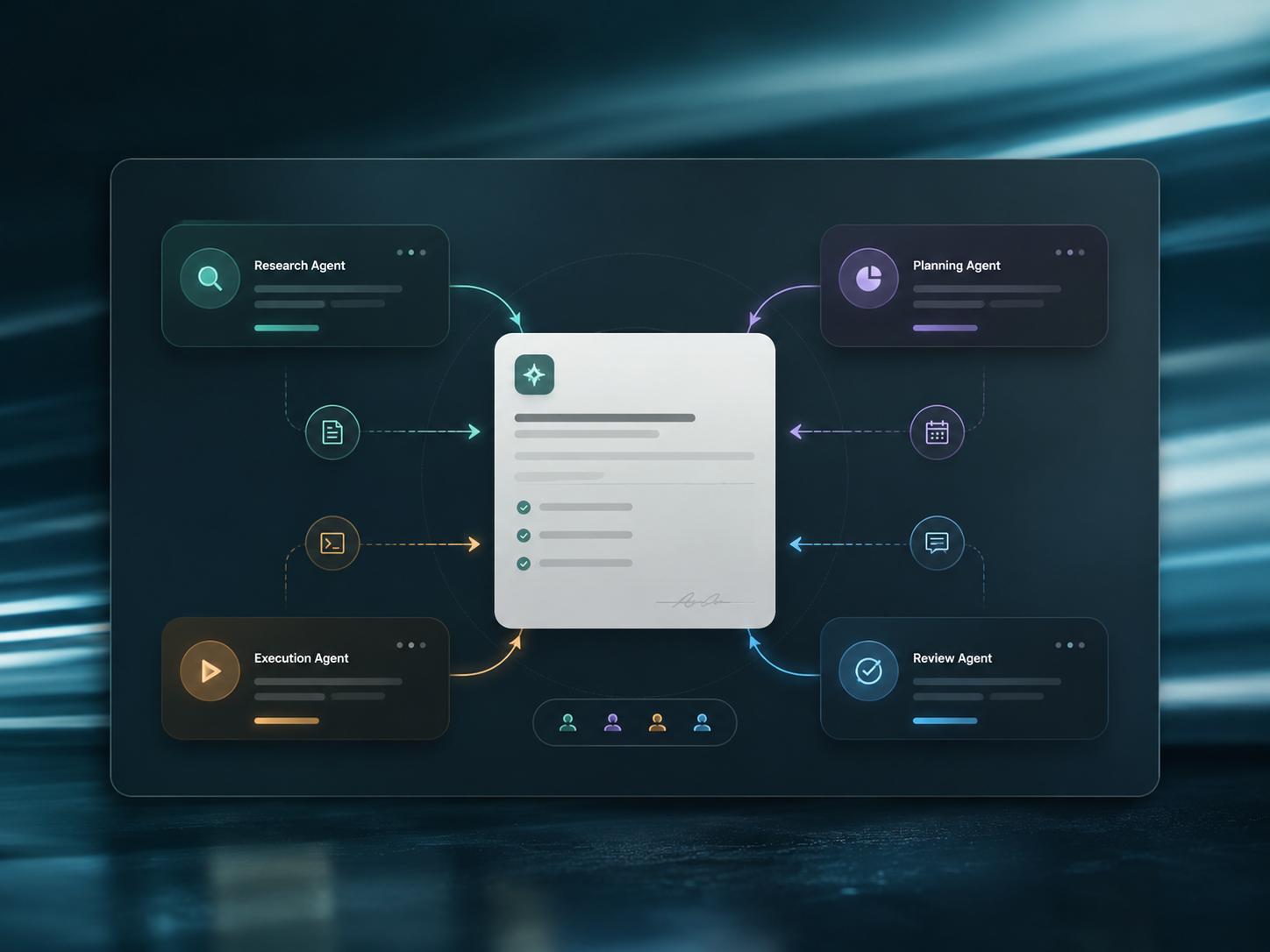
Here’s how I think about the fleet now: like a beehive. The agents are worker bees, built for the simple, repetitive, monotonous execution that used to eat hours of human attention. But they answer to the queen. Nothing they produce gets printed, published, or sent without a human confirming it first. That’s the checks and balance, and it’s the design, not a limitation.
The goal was never maximum autonomy. The goal is optimal leverage: ruthlessly automate the execution, and fiercely protect the judgment. The paradox is that this makes the human role bigger, not smaller. With the execution handled, your best people become decision-makers. The queen isn’t busier. She’s clearer.
Build Less. Build For The Outcome.
Building agents to say you built them means nothing to your business. Worse, it can quietly make you slower, because every system that produces output also demands your attention.
Before you build the next one, ask what changes if it works. Name the hours it gives back. Name the decision it improves. If you can’t, don’t build it. And if you’ve already built a fleet, run the audit: line each one up and ask, so what? Kill the ones that can’t answer.
The point of AI in a business was never to look like the future. It was to free your best thinking and buy back your time, with a human still holding the final say. If it isn’t doing that, it isn’t an asset. It’s just well-architected noise.


























Read the Comments +