



I’ve been obsessed with this question lately: How do people like Elon Musk run five companies simultaneously? Or Sam Altman navigates OpenAI while advising dozens of startups? How does Jack Dorsey split his day between Twitter and Square? How did Steve Jobs divide his week between Apple and Pixar?
The answer isn’t superhuman discipline or 80-hour weeks, though those certainly play a role. It’s a systematic approach to leverage that most productivity advice completely misses.
I’m not a productivity guru. But I’ve spent the last few weeks digging into how the highest-performing CEOs actually structure their time, and the patterns that emerge are both surprising and immediately applicable — even if you’re not running five companies.
Here’s what I’m learning.
Time Allocation Before Task Prioritization
Most productivity advice starts with the wrong question: “What should I prioritize today?”
The problem? When you look at a to-do list that spans multiple projects, multiple roles, and multiple areas of your life, prioritization becomes paralyzing. How do you compare the importance of a product decision versus a hiring decision versus a customer issue versus strategic planning?
You can’t. At least not effectively.
Sam Altman, CEO of OpenAI, uses a three-pillar system he’s refined over years: “Make sure to get the important shit done,” “Don’t waste time on stupid shit,” and “Make a lot of lists.” Simple, but the execution is what matters.
He creates lists at three levels — yearly, monthly, and daily — and transcribes them frequently on paper. The act of rewriting forces regular prioritization review. But here’s the key insight: he structures these lists to generate momentum. He starts and ends each day with tasks where he can make real progress, because the feeling of accomplishment fuels more accomplishment.
Elon Musk takes this further with what’s been called “time allocation before task prioritization.” Instead of starting with tasks and trying to fit them into his schedule, he starts with time blocks allocated to specific domains.
According to his biographer Walter Isaacson, Musk divides his week strategically across his companies — two days at Tesla, two days at SpaceX, and so on. Within each day, he breaks his schedule into focused blocks, some reports suggest down to five-minute increments, though Musk himself has said he needs “long uninterrupted times to think” for creative work.
This is an area I am completely aligned with, time to create or think strategically, requires time free of distractions to get into flow state.
The principle is the same: allocate time to your major domains first, then prioritize tasks within those blocks. This prevents the cognitive overload of trying to compare tasks across completely different areas of responsibility.
Steve Jobs operated the same way — one day with the product team, one day with marketing, one day at Pixar. Jack Dorsey spent mornings at Twitter, afternoons at Square.
The system works because of two fundamental principles:
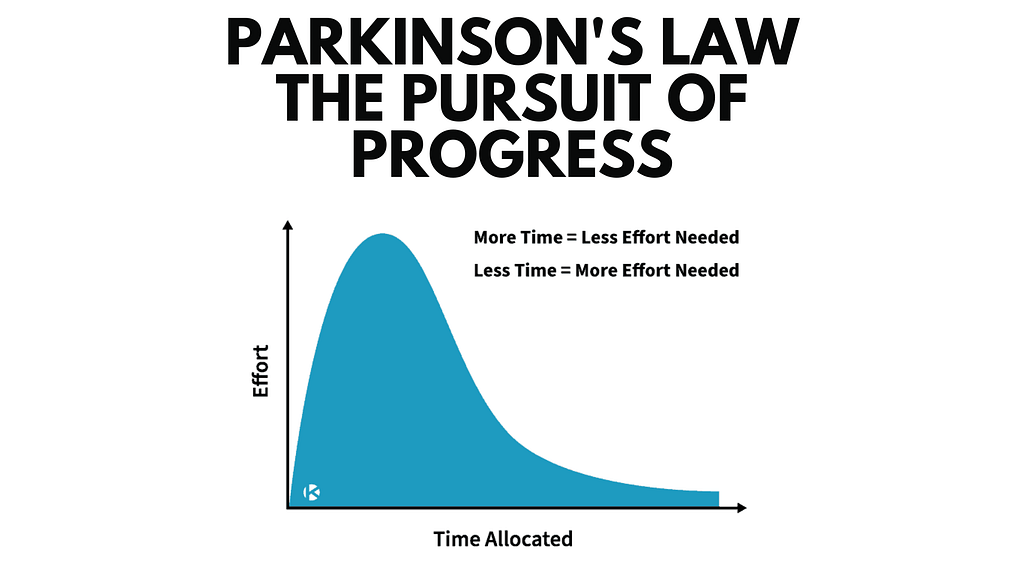
Parkinson’s Law: Work expands to fill the time available for its completion. When you pre-allocate blocks, you create constraints that force efficiency. As Musk puts it: “If you give yourself 30 days to clean your house, it will take 30 days. If you give yourself 3 hours, it will take 3 hours.”
Context Switching Cost: Every time you shift between different types of work — say, from a technical product decision to a financial planning conversation — you pay a cognitive tax. Batching similar work into dedicated blocks minimizes this tax.
For most leaders, this means: stop trying to prioritize tasks across your entire life. Instead, allocate blocks of time to your major domains (product, verticals or divisions, people, strategy, operations, personal), then prioritize within those blocks. The clarity is immediate.
First Principles Thinking: The Real Productivity Multiplier
Here’s where most productivity advice falls apart: it optimizes for doing more things faster. But what if you’re working on the wrong things?
Elon Musk’s most powerful productivity tool isn’t his time blocking — it’s his approach to problem-solving through first principles thinking.
First principles thinking means breaking down a problem to its most fundamental truths, then reasoning up from there. It’s the opposite of reasoning by analogy, which is what most of us do most of the time.
Musk’s example: In 2002, he wanted to build rockets but was quoted $65 million per rocket. Instead of accepting this as the market price, he asked: “What are rockets made of? Aerospace-grade aluminum alloys, plus some titanium, copper, and carbon fiber.”
He looked up the raw material costs on commodity markets. Turns out, the material cost of a rocket is only about 2% of the typical price. The rest is manufacturing process, overhead, and margin.
SpaceX rebuilt rocket manufacturing from first principles. The result? Dramatically lower costs and reusable rockets that have transformed the space industry.
This applies directly to productivity. Most leaders accept inherited processes, org structures, and ways of working because “that’s how it’s done.”
First principles thinking asks:
- What are we actually trying to achieve?
- What are the fundamental constraints?
- How would we design this from scratch?
Applied to your workday:
- What are you doing simply because that’s what people in your role typically do?
- What meetings exist because they’ve always existed?
- What reports get generated because they were once useful but no one actually uses anymore?
Strip problems down to their fundamentals. Rebuild from there. You’ll often find you can eliminate 50% of what you’re doing without losing any actual value.
As Altman notes in his productivity writing: “It doesn’t matter how fast you move if it’s in a worthless direction. Picking the right thing to work on is the most important element of productivity and usually almost ignored.”
The “Important Shit vs Stupid Shit” Filter (Altman Filter)
Sam Altman is relentless about one thing: only working on what actually matters.
He’s learned over years that he can’t be productive working on things he doesn’t care about or doesn’t like. So he’s structured his life to avoid those things entirely — through delegation, avoidance, or just saying no.
This isn’t about being precious. It’s about recognizing that stuff you don’t like creates a painful drag on morale and momentum. And morale and momentum compound.
His framework is simple but ruthless:
Make sure to get the important shit done. He’s relentless about completing his most important projects. If he really wants something to happen and pushes hard enough, it usually happens. This requires knowing what’s actually important — which goes back to first principles thinking.
Don’t waste time on stupid shit. He tries to be ruthless about saying no and doing non-critical things in the quickest way possible. He generally avoids meetings and conferences because he finds the time cost to be huge. When he does take meetings, 90% are a waste of time — but the other 10% really make up for it.
Make a lot of lists. Lists create clarity. They force you to articulate what matters. They become a forcing function for the first two principles.
The key insight: most leaders spend enormous amounts of energy on things that don’t actually move the needle. Not because they’re lazy, but because they haven’t ruthlessly filtered what deserves their attention.
Altman’s advice on delegation captures this perfectly: “Remember that everyone else is also most productive when they’re doing what they like. Try to figure out who likes (and is good at) doing what, and delegate that way.”
If you find yourself consistently unmotivated by what you’re doing, that’s not a discipline problem — it’s a signal that you need to either delegate it or eliminate it entirely.
Strategic Batching and The AI Multiplier
Time blocking allocates when you work on different domains. But within those blocks, how you structure the actual work matters enormously.
Musk is known for strategic task batching — combining activities wherever possible to maximize efficiency. He answers emails while eating. He takes meetings over lunch. He’s been quoted saying he can be with his kids and still be on email, still be working.
Whether you agree with that approach to family time or not, the principle is sound: certain types of work can be combined without losing effectiveness. Low-cognitive-load tasks (email triage, administrative work, routine approvals) can be batched with other activities. High-cognitive-load tasks (strategic decisions, creative work, complex problem-solving) need protected focus time.
But here’s where 2026 changes the game entirely: AI as a force multiplier.
The most productive leaders aren’t just batching tasks anymore — they’re delegating entire categories of work to AI tools. This isn’t about replacing human judgment. It’s about removing friction between intent and outcome.
Sam Altman starts his day by addressing critical emails for at least 30 minutes. But the definition of “critical” has shifted. With AI tools, executives can now:
- Upload 50 PDFs and 200 emails and ask: “Summarize the risks to the Q3 timeline and highlight any contradictions between teams”
- Turn messy meeting notes into structured action plans
- Generate first drafts of routine communications
- Analyze patterns across customer feedback without manual review
The pattern emerging among high-performing leaders: they use AI to facilitate thinking, not to do the thinking. AI performs synthesis; humans perform judgment.
This creates what some are calling “centaur” productivity — a hybrid of human creativity and machine speed. The most productive individuals in 2026 aren’t working harder. They’re using AI to compress time on low-value work so they can focus on high-value decisions.
Energy Management Over Time Management
Here’s something that doesn’t get enough attention in productivity discussions: you can have perfect time blocking, ruthless prioritization, and great systems, but if you’re exhausted, none of it matters.
Sam Altman is particular about his physical routines — 15-hour daily fasts, strategic use of caffeine (espresso immediately upon waking, another shot post-lunch for about 200mg daily), quarterly blood testing to optimize supplements, and prioritizing sleep with a cold, dark, quiet room.
Elon Musk, despite his notorious work hours, lifts heavy weights three times a week and does high-intensity interval training. He’s said: “In addition to productivity gains, this is also the exercise program that makes me feel the best overall.”
The pattern across high-performers: they don’t treat physical health as separate from productivity. They treat it as foundational to productivity.
Altman avoids scheduling early meetings because that’s when he’s most productive. He uses a full-spectrum LED light for 10–15 minutes most mornings — what he calls a “ridiculous gain” for mental clarity. He structures his day around his natural energy cycles.
The insight: time is linear, but energy is cyclical. The 9am hour is not identical in value to the 4pm hour. Schedule your highest-cognitive-load work during your peak energy periods. Protect those windows ruthlessly.
As one productivity researcher put it: “The fundamental flaw in 20th-century management theory was the commodification of time. We treated every hour as identical in value. In 2026, we understand that this is biologically false.”
The Meeting Discipline No One Talks About
Elon Musk has an unconventional attitude toward meetings that reveals something important about how top performers think about time.
He prefers meetings to be either 15–20 minutes or 2 hours. Nothing in between.
His reasoning: “The default of 1 hour is usually wrong, and leads to a lot of wasted time.”
Short meetings work for quick decisions, updates, and tactical alignment. Long meetings work for deep strategic discussions, complex problem-solving, or workshops that require sustained focus.
The standard one-hour meeting? It’s rarely actually necessary. It’s just the default calendar setting.
Altman takes this further: he avoids meetings almost entirely, finding work in his office more valuable. He keeps space in his schedule for “chance encounters and exposure to new people and ideas” but actively avoids scheduled gatherings unless absolutely necessary.
When meetings are required: clear agenda, defined objectives, set end time. No meeting without a purpose. Many top CEOs also use standing meetings to create energy and keep things focused.
The broader principle: question meeting defaults. The one-hour meeting is a default. The all-hands every week is often a default. The monthly board deck with 50 slides is a default.
First principles thinking applied to meetings: What are we actually trying to accomplish? What’s the minimum viable structure to accomplish it? How would we design this from scratch?
Often, the answer is: send an email. Record a video. Share a document for async review. Meet for 15 minutes to decide, not to discuss.
Compound Growth Applied to Productivity
Here’s the insight that ties everything together, from Sam Altman:
“Compound growth gets discussed as a financial concept, but it works in careers as well, and it is magic. A small productivity gain, compounded over 50 years, is worth a lot. So it’s worth figuring out how to optimize productivity.”
He breaks it down: “If you get 10% more done and 1% better every day compared to someone else, the compounded difference is massive.”
This reframes the entire productivity conversation. You’re not trying to 100x your output overnight. You’re trying to build systems that create small, consistent gains that compound over time.
Time blocking compounds because it reduces context switching, which reduces cognitive fatigue, which improves decision quality, which leads to better outcomes, which creates momentum.
First principles thinking compounds because solving the right problems eliminates entire categories of future problems.
Energy management compounds because sustainable high performance over decades beats unsustainable sprints that lead to burnout.
The leaders running multiple companies aren’t superhuman. They’ve built systems that create leverage. And leverage, over time, compounds into results that look superhuman from the outside.
What This Actually Means for You
You’re probably not running five companies. But you’re likely juggling five different roles within your one company — strategist, operator, manager, fundraiser, face of the brand.
The same principles still apply:
Start with time allocation, not task prioritization. Block time for your major domains first. Product/operations, people/culture, strategy/planning, business development, personal. Prioritize tasks within those blocks, not across them.
Apply first principles thinking to your work. What are you doing because “that’s how it’s done” versus what actually needs to be done to achieve your goals? Strip it down. Rebuild from there.
Filter ruthlessly. Important shit versus stupid shit. If you’re not excited about working on something and it’s not truly critical, delegate it or eliminate it. Life’s too short and momentum matters too much.
Batch strategically and leverage AI. Combine low-cognitive-load tasks. Use AI to compress time on synthesis and first drafts so you can focus on judgment and decisions.
Manage energy, not just time. Schedule hard work during peak energy. Protect sleep, movement, and recovery. You can’t be productive if you’re exhausted.
Question meeting defaults. Fifteen minutes or two hours. Clear purpose or don’t meet. Async by default, sync when essential.
Think in decades, not days. Small gains compound. Build systems that create 1% improvements consistently rather than chasing 100x overnight.
The goal isn’t to work more. It’s to create more leverage from the time you have.
Because the leaders who are accomplishing the most aren’t doing 100x more work.
They’re creating 100x more leverage.
I found many of these frameworks from Sam Altman’s blog post on productivity, Walter Isaacson’s biography of Elon Musk, and various interviews with top CEOs. This isn’t prescriptive advice — it’s what I’m learning about how high performers actually structure their time. Take what’s useful, ignore what’s not, and adapt it to your reality.




















Read the Comments +