


The Medvi story isn’t about weight-loss drugs. It’s about a new operating model for building and what it means for every CEO and founder paying attention.
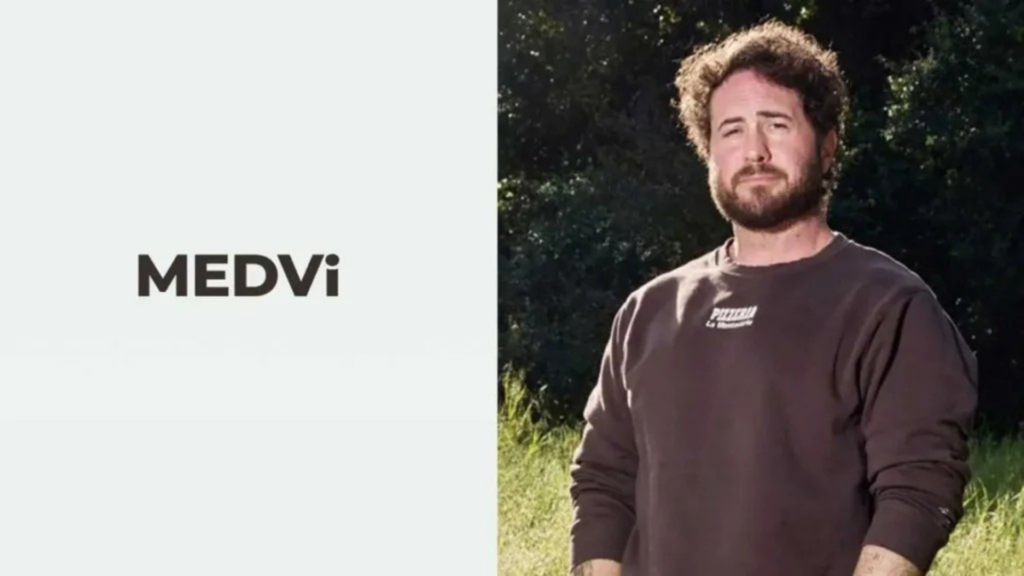
In September 2024, Matthew Gallagher launched a telehealth company in Los Angeles with $20,000 of personal capital, no investors, and no employees except his brother.
By the end of 2025, Medvi had generated $401 million in revenue and $65 million in net profit.
In 2026, it’s on track to do $1.8 billion. More than $3 million per day. Over 500,000 patients.
Two employees the whole time.
I’ve been sitting with this story for a while now, because I think most of the conversation around it is getting the lesson wrong. People are talking about GLP-1 drugs, telehealth and whether the company is a legitimate “AI company” or a marketing machine sitting on top of rented infrastructure.
All of that misses the point.
The Real Story Isn’t What Medvi Sells. It’s How It’s Built.
Here’s the architecture:
Gallagher didn’t build a physician network. He didn’t hire a compliance team or stand up a pharmacy, didn’t build an ops organization. He rented all of it, through infrastructure partners like OpenLoop Health and CareValidate, who handle clinical services, prescription processing, and fulfillment. The operational complexity stayed off his balance sheet entirely.
What he built: the customer relationship, brand, marketing engine and the intelligence layer.
And for nearly everything else, software development, copywriting, ad creative, business analytics, customer service automation, he used AI. ChatGPT, Claude, Grok, Midjourney, Runway. Not as productivity tools. As functional replacements for entire categories of work that traditionally required headcount.
The result was a 16.2% net margin in the company’s first full year of revenue. For context: most startups don’t reach profitability for years. Medvi was printing $65 million in profit while most venture-backed competitors were still burning cash trying to hire their way into unit economics.
This is Sam Altman’s prediction made real, that AI would soon enable a one-person company to reach billion-dollar scale. Altman has said it publicly. The NYT profiled Medvi as the clearest proof of concept yet.
What the Operating Model Actually Is
Strip away the healthcare context and the playbook looks like this:
Rent execution infrastructure instead of building it. Clinical services, compliance, fulfillment, logistics, all third-party capacity. You pay for what you use, not for what you employ. The risk structure changes completely.
Use AI to replace the middle layer. The work that used to sit between “strategy” and “output”, creative, copy, code, customer support, analytics, AI handles. Your role becomes directing, editing, and deciding. Not producing.
Own the customer relationship and the intelligence layer. Brand, positioning, marketing engine, demand generation, these are the things that compound. Everything else is a commodity you can rent.
Enter a category with existing demand. Gallagher didn’t manufacture demand for GLP-1 medications. The demand existed; he built the best funnel to capture it. The operating model works best when the market is already moving.
The outcome: a CEO or founder who can move faster, operate leaner, and reach scale that would have taken a traditional organization years and tens of millions of dollars to approach.
The Part of the Story That’s Worth Sitting With
Medvi also attracted real scrutiny, an FDA warning letter for marketing claims on compounded medications, questions around affiliate tactics, controversy about certain advertising practices. The growth story has complexity and risk embedded in it.
I’m not going to pretend otherwise.
But here’s what I think matters: the controversy is mostly about what Medvi was selling and how it sold it. The operating model underneath is separate from that. The architecture, AI + rented infrastructure + owned customer relationship + category demand, is replicable. It’s not specific to telehealth or GLP-1s.
You can apply it to services, software, media, consulting and any business where execution infrastructure can be rented and AI can handle the production layer.
Why This Matters Right Now
I talk to CEOs, founders, and executives every week who are using AI as a productivity enhancement, writing emails faster, generating first drafts, summarizing documents. That’s not the move.
The move is redesigning the operating model entirely. Asking: what does my company look like if AI handles everything it can handle, and humans focus on the things only humans can do*, judgment, relationships, brand authority, category positioning?
Most organizations are nowhere near that question yet. They’re using a 2024 tool with a 2014 org chart.
The CEOs and founders who are asking the redesign question right now and building toward that answer, are going to look like Medvi did to their competitors: impossibly lean, impossibly fast, impossibly profitable.
Gallagher started with $20,000 and rethought the math on what a company has to be.
That’s the lesson.
—
Steph Pliha is Founder + CEO of Tribe Consulting, a GTM and brand strategy firm working with founders, operators, and executives building in the AI era. Her Fractional Growth + AI Advisor™ engagement is built specifically for CEOs and founders who want to redesign their operating model around AI, not just add it as a layer.




















Read the Comments +