
I used to think the problem was always one or the other.
Either you had someone sitting with a clear picture of where they were going and no idea how to move, or you had someone running at full speed toward something they’d never actually defined. Is it Vision Without Action or Action Without Vision?
Both could lead to a poor outcome. Choose which one fits your situation and fix it.
I was wrong about the framing. The more I work with CEOs and commercial leaders, the more I see that the expensive version isn’t being stuck at one end. It’s getting halfway down the wrong road because the vision and the action were never connected to each other.
The vision was real. The work was real. They just weren’t in the same conversation.
What That Actually Looks Like
Here’s the version I see most often. The company has a compelling thesis. Leaders can articulate it well. They know where they want to go, they know what the outcome looks like, and they believe in it. That part is working.
Then there’s the day-to-day. Calls get made, content goes out, decks get revised, the pipeline gets worked. A lot gets done, the calendar is full, and progress is happening.
But the two things don’t touch. The vision isn’t driving the prioritization. The actions aren’t building toward the outcome. They’re both real, and they’re both sincere, and they exist in separate compartments.
And the thing that holds them apart, more than anything else, is the absence of a clear architecture between them. Not a strategy document. Not a roadmap. The working logic that answers the question: given where we’re trying to go, which of these things we’re doing is actually moving us there?
Most organizations don’t have that. Not because they’re not smart. Because nobody made time to build it, and then the calendar stayed full and it never got built.
Why This Is Harder With AI In The Room
I’ve been building with AI agents for most of this year. The rebuild I’ve talked about elsewhere, the one that broke the first time and worked the second, taught me something specific about this gap.
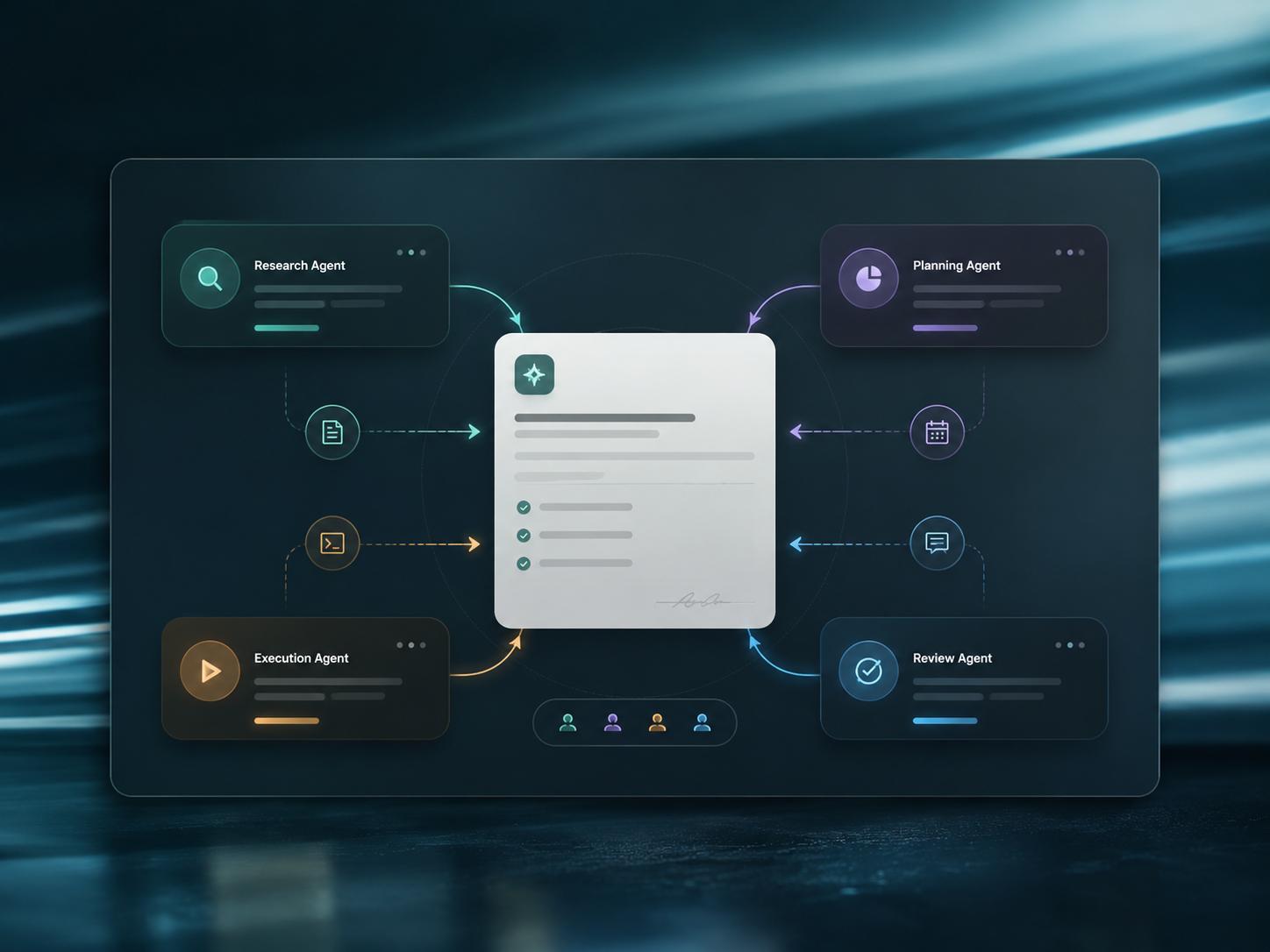
AI is very good at producing output. Fast, clean, a lot of it. Give it a task and it runs. Give it a workflow and it executes. That capability is real and useful, and I rely on it heavily in how Tribe operates now.
But AI has no judgment about whether the output is pointed in the right direction. It doesn’t know if the content you’re producing is building toward the outcome you want or generating activity that looks good and doesn’t compound. It doesn’t know if the outreach sequence you’ve built is targeting the right ICP or just the easier one to reach. It doesn’t course-correct unless you’ve built the architecture that tells it what to optimize for.
So what happens in a lot of organizations right now is the action layer gets faster. More output, better production values, cleaner execution. And the vision layer stays exactly where it was, maybe three slides in a pitch deck and a founding-era mission statement that nobody reads.
The speed of the action makes the gap feel smaller than it really is. You’re busy. A lot is happening. And the thing you actually wanted to get to is no closer than it was six months ago.
The Connective Tissue
What I’ve started calling the connective tissue is the working logic between vision and action. It’s not a document, though it often needs to become one at some point. It’s a set of active decisions.
What does success look like in ninety days, and why ninety days? What does the buyer need to believe before they’ll act, and what do we currently do to build that belief? Which pipeline constraint is actually upstream of all the others? What’s the one move that unlocks the most downstream progress from here?
Those aren’t strategic questions in the abstract. They’re the same questions I walk through with every client in a diagnostic, because they’re the questions that connect the vision to the thing you should be doing tomorrow morning.
The reason they don’t get answered in most organizations isn’t a lack of intelligence or ambition. It’s that answering them requires a kind of focused, unhurried thinking that doesn’t survive in a full calendar. You need to be able to sit with the real situation, without the pressure of a call in forty-five minutes, and work through what’s actually true versus what you’ve been assuming.
That’s the hardest thing to protect. And it’s the thing that makes everything else work better.
What I’m Building Towards In Season 2
I’ve been in conversations about Season 2 of Leadr. Podcast for a few months now, and the direction has become clearer. The DOAC model keeps coming up in those conversations, not as an inspiration to copy but as evidence that the format I’m most interested in, a genuine exchange with someone who’s done the work, connects with the kind of audience I want to build.
The shows I want to make are about the connective tissue. They’re not about strategy frameworks in the abstract. They’re about what it actually looks like when a CEO is sitting with the gap between their vision and their current reality, and they find the thing that builds the bridge. That conversation happens in real time, with real people who have real answers.
The guests I want on aren’t always the most famous names. They’re the people who have actually made that connection between vision and action in a domain I care about, whether that’s longevity science, medical innovation, faith and purpose, building companies with AI, or figuring out what leadership means when the old playbook doesn’t apply anymore.
I’ll be sharing more on that soon. For now, the sentence that’s been sitting with me this week:
Vision without architecture is ambition. Action without vision is activity. The thing worth building is the bridge.






















Read the Comments +